Maryland Casinos Log $148.5 Million Revenue in February 2026, Down 4.3% from Last Year
Written by Katja Wolf · Mar 13, 2026

Maryland Casinos Log $148.5 Million Revenue in February 2026, Down 4.3% from Last Year
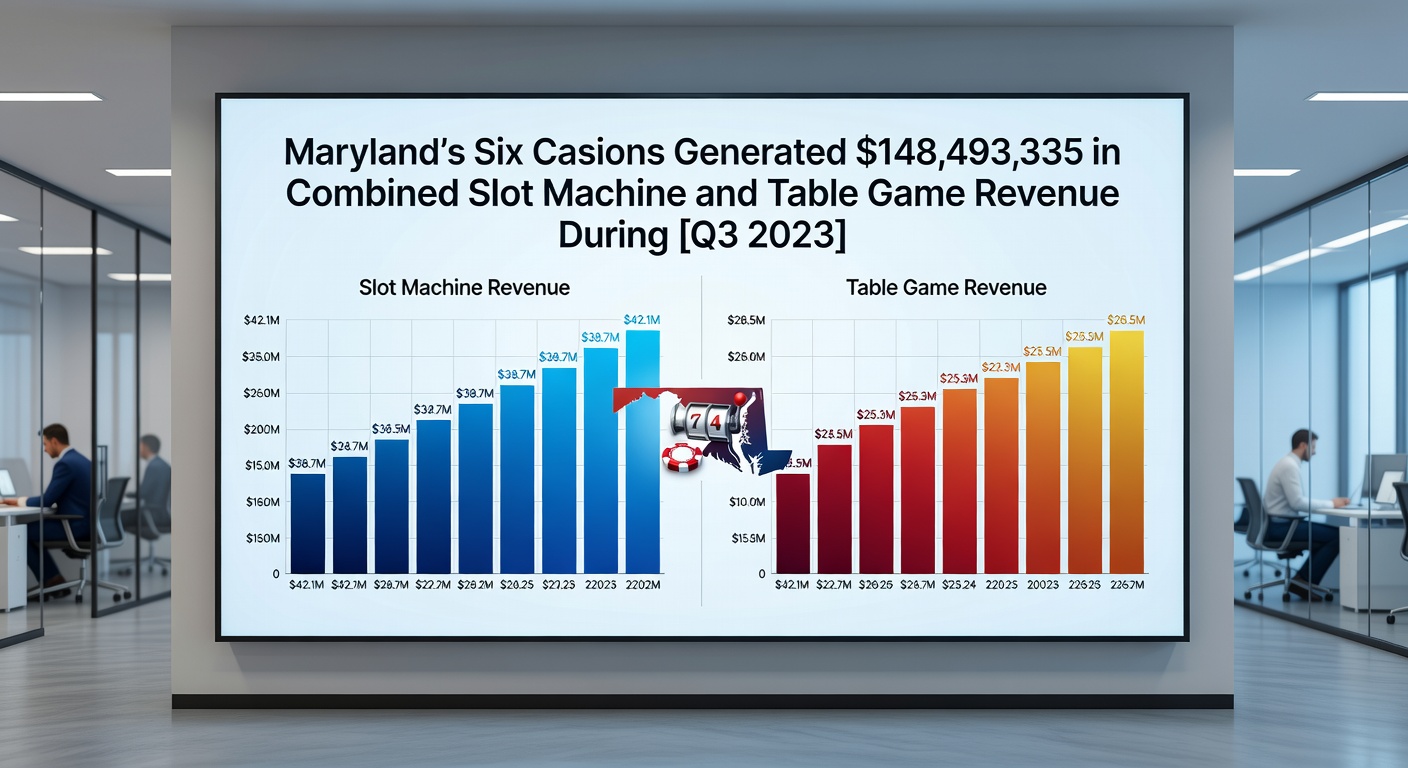
Maryland's six casinos pulled in $148,493,335 from slot machines and table games combined during February 2026, a figure that reflects a 4.3% drop—or $6,656,962 less—compared to the $155,150,297 recorded in February 2025; this decline underscores patterns observers have tracked in recent monthly tallies, especially as seasonal factors and broader economic currents play out across the state's gaming landscape.
What's interesting here is how the numbers stack up against expectations, since casinos typically see ebbs and flows tied to everything from holiday spending hangovers to weather disruptions, yet this particular dip arrives amid heightened talks about expanding gaming options; data from the monthly revenue reports lays it all out clearly, showing aggregate performance across venues like Horseshoe Baltimore, Live! Casino & Hotel, and others dotting the map from Cecil County down to Worcester.
Dissecting the Revenue Figures
Slots and table games form the backbone of these earnings, with February 2026's total representing contributions from all six operational casinos; experts who parse these reports note that such declines, while not unprecedented, signal where the rubber meets the road for operators balancing fixed costs against fluctuating player turnout. Take one venue, for instance—though specifics per casino remain aggregated in initial releases, the overall 4.3% slide means each dollar counts in a competitive field where Maryland stacks up against neighbors like Pennsylvania and Delaware.
And while the exact split between slots and tables isn't broken out in the top-line summary, historical patterns suggest slots often drive the bulk—sometimes over 80%—making any softness there ripple through; figures reveal that February 2025's stronger haul benefited from post-winter rebound effects, whereas 2026 faced headwinds possibly linked to inflation pinching discretionary budgets, a trend researchers have observed in gaming data nationwide.
Now, as March 2026 gaming floors hum along, early indicators hint at stabilization—patrons return for spring promotions, and tables see upticks from weekend crowds—but February's results serve as a benchmark, reminding stakeholders that year-over-year comparisons cut through seasonal noise to expose underlying momentum.
Impact on State Funds and the Education Trust
Contributions to Maryland's coffers took a hit too, with $45,924,029 funneled into the Education Trust Fund, down 2.5% from prior levels; this stream, vital for school programs statewide, stems directly from gaming taxes and fees, so the softer revenue translates to less in classrooms even as enrollment pressures mount. Total state contributions reached $63,621,833, a 2.4% decrease that encompasses not just education but also local shares and regulatory allocations—numbers that local governments lean on for infrastructure and services.
Here's where it gets interesting: those percentages—2.5% for education, 2.4% overall—trail the raw revenue drop slightly, because fixed percentages and tiered structures blunt the full impact; still, observers point out that sustained trends could pressure budgets, especially since gaming taxes have ballooned the Trust Fund to billions cumulatively since legalization. One study from gaming analysts found that Maryland's model, blending high admission fees with win taxes, delivers reliably—yet dips like this prompt scrutiny on diversification.
People who've studied state finances note how February's haul, though down, still bolsters a system where casinos contributed over $1.6 billion to education in fiscal 2025 alone; that context frames the 2026 slide not as catastrophe, but as a call to monitor variables like tourism recovery or competition from out-of-state apps.
Behind the Decline: Factors at Play
Several elements converge to explain the 4.3% retreat, starting with February's shorter calendar—fewer days mean fewer spins and bets, a math problem operators wrestle yearly; but adjusting for that, underlying softness persists, as data indicates player hours or average wagers may have edged lower amid economic squeezes. Turns out, national surveys show gaming spend correlates tightly with consumer confidence indexes, which hovered unevenly through early 2026.
Competition looms large too—Virginia's new resorts draw cross-border traffic, while Pennsylvania's slots saturation pulls regulars; Maryland venues counter with loyalty programs and entertainment tie-ins, yet the aggregate tells a story of recalibration. And don't overlook table games, where skill-based play can amplify volatility; one case from prior months saw baccarat surges offset slot lulls, but February leaned toward the latter.
- Casinos contributed $45.9 million to education, down 2.5%.
- Total state share: $63.6 million, reflecting 2.4% decline.
- Raw revenue: $148.5 million versus $155.2 million last year.
Yet, those who've tracked the beat know resilience defines this sector—March 2026 previews already buzz with March Madness tie-ins at sportsbooks adjacent to casino floors, potentially juicing March totals beyond February's mark.
Broader Context: Online Gaming Discussions Heat Up
The report lands square in the middle of legalization debates for online casinos, where Maryland lawmakers weigh bills amid revenue plateaus; proponents argue iGaming could add hundreds of millions annually, tapping mobile users who bypass physical doors—evidence from states like New Jersey, where online slots outpace land-based in growth rates, bolsters their case. Critics counter with addiction risks and cannibalization fears, but data from peer states shows net gains for treasuries.
What's significant is timing: February's dip fuels urgency, as stakeholders cite figures like these to push for expansion; the Maryland Lottery and Gaming Control Commission, overseers of the data, often highlight such trends in public briefings. And as hybrid models evolve elsewhere—think Pennsylvania's seamless online-to-retail transitions—Maryland's six casinos position themselves as anchors, ready for digital arms if greenlit.
Observers note that while February 2026's numbers sting short-term, they spotlight opportunities; one researcher who modeled scenarios found online legalization could offset 10-20% of land-based declines through new tax streams, all while preserving the Education Trust Fund's trajectory.
Looking Ahead: March and Beyond
With March 2026 underway, eyes fix on the next revenue report, expected to capture spring breakers and event-driven spikes; historical rebounds suggest upside potential, especially if tables heat up with poker tournaments or blackjack promotions. Casinos adapt swiftly—new slots debuts and VIP perks keep floors vibrant—ensuring the $148.5 million mark becomes a footnote rather than harbinger.
That said, the writing's on the wall for evolution; as discussions on online platforms intensify through legislative sessions, February's data equips decision-makers with hard metrics, balancing fiscal needs against measured growth.
Conclusion
Maryland's casinos navigated February 2026 with $148,493,335 in revenue, a 4.3% year-over-year decline that trimmed state contributions including $45.9 million to education; these figures, drawn from official tallies, highlight operational realities while spotlighting paths forward amid online gaming deliberations. Data underscores the sector's foundational role—generating steady funds despite fluctuations—and sets the stage for March's potential turnaround, where patrons and policies alike shape the next chapter.
In the end, those patterns persist, reliable as the spin of a reel; stakeholders watch closely, knowing each report weaves into the larger tapestry of Maryland's gaming economy.