Torch Electronics Suspends All Operations in Missouri After Joint Federal Probe Targets Illegal Gambling Machines
Written by Katja Neumann · Apr 9, 2026

Torch Electronics Suspends All Operations in Missouri After Joint Federal Probe Targets Illegal Gambling Machines
Torch Electronics, long recognized as Missouri's largest provider of illegal gambling devices, reached an agreement to halt every aspect of its operations starting Friday, April 10, 2026, a move tied directly to an intensifying joint criminal investigation; the announcement landed on April 8, 2026, when Missouri Attorney General Catherine Hanaway stepped up in Springfield to detail the suspension, coordinating closely with the U.S. Attorney’s Office for the Eastern District of Missouri and the U.S. Attorney’s Office for the Western District of Missouri.
Customers across the state received clear directives to power down those gray market slot machines by the deadline, signaling a sharp pivot in efforts to dismantle unauthorized gambling setups that have dotted truck stops, bars, and convenience stores for years; this crackdown zeroes in on devices mimicking casino slots, yet operating outside Missouri's strict gaming laws, which limit legal gambling primarily to riverboat casinos and the state lottery.
Unpacking the Announcement and Its Immediate Ripple Effects
Hanaway's public statement in Springfield painted a picture of coordinated law enforcement muscle flexing against Torch's sprawling network, where federal and state prosecutors united to push the company into voluntary shutdown rather than face full prosecution; observers note how this approach mirrors strategies used in other states tackling gray market proliferation, allowing quick cessation while investigations grind on.
The suspension covers all Torch operations statewide, from device deployment to maintenance and collections, effectively yanking thousands of machines offline in one sweeping action; customers, often small business owners hosting these units, got formal notices spelling out the April 10 cutoff, with warnings that continued use could draw them into the probe's crosshairs.
But here's the thing: this doesn't just idle hardware, it disrupts a revenue stream that's fueled debates in Missouri for over a decade, as gray machines rake in millions annually while skirting taxes and regulations; data from past enforcement actions shows similar takedowns leading to immediate revenue drops for operators, although exact figures for Torch remain under wraps pending further disclosures.
Joint Investigation: Federal and State Forces Converge
The probe pulling Torch into compliance stems from a multi-agency effort blending Missouri AG resources with U.S. Attorneys from both federal districts covering the state's eastern and western halves; this setup ensures comprehensive coverage, since Torch devices blanketed locations from Kansas City westward to St. Louis eastward, threading through urban hubs and rural stretches alike.
Investigators targeted what they classify as illegal gambling devices, electronic setups programmed to pay out winnings in cash or prizes beyond state-approved limits; according to reports from the scene, evidence gathered includes financial records, device software analyses, and witness statements from locations housing the machines, building a case that prompted Torch's leadership to opt for suspension over courtroom battles.
What's significant here lies in the preemptive halt, as companies facing such scrutiny often negotiate terms to avoid indictments, preserving some operational leeway down the line; the Missouri AG's office, through Hanaway, emphasized public safety and revenue protection, noting how unregulated machines erode trust in legal gaming outlets like the 13 licensed casinos along the state's waterways.
Torch Electronics: From Dominance to Shutdown
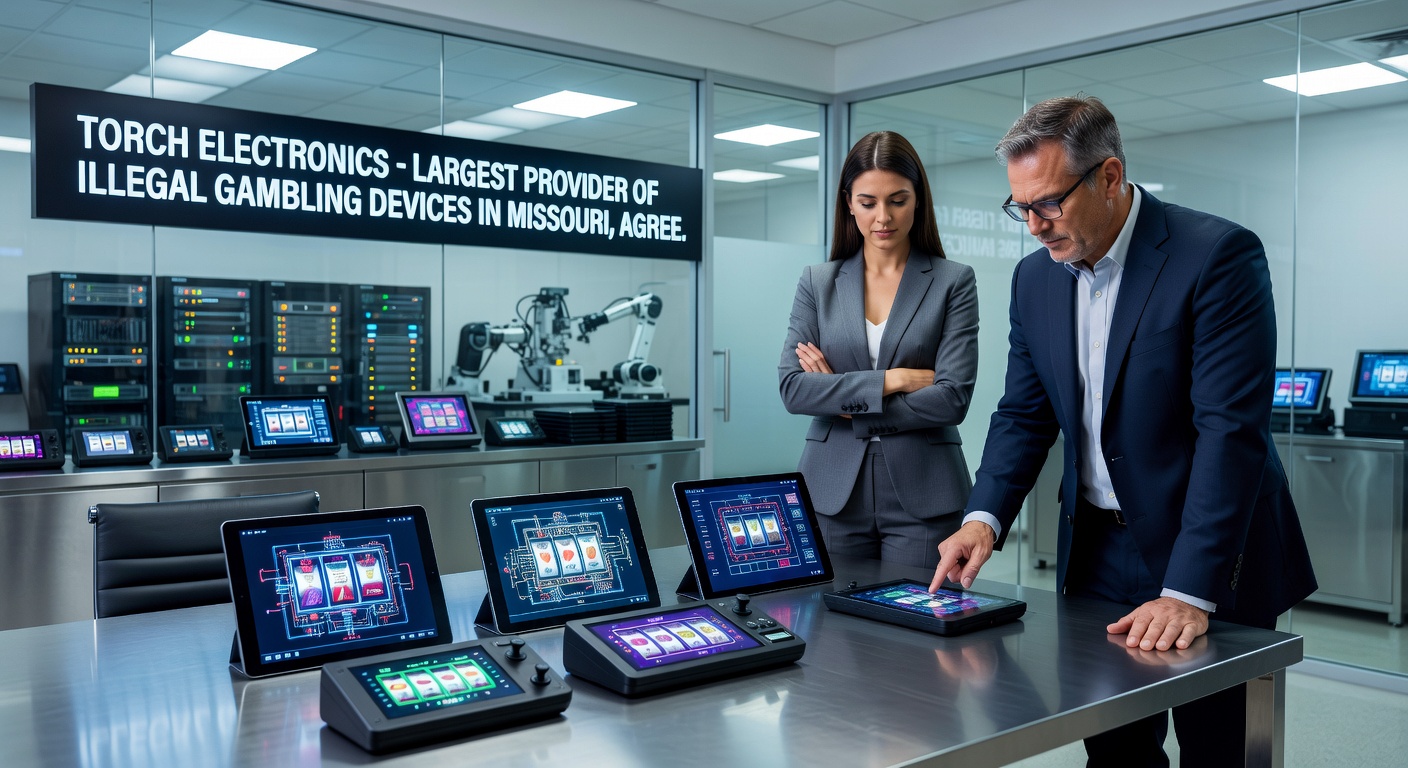
As Missouri's top player in the gray market arena, Torch Electronics commanded a vast footprint, supplying devices to hundreds of sites where players wagered on video poker, keno-style games, and slots disguised as skill-based entertainment; records indicate the company rolled out thousands of units, generating steady payouts that operators split with hosts, all while flying under full regulatory radar.
Turns out, enforcement has nipped at Torch's heels before, with smaller seizures and fines in prior years failing to stem expansion, but this federal infusion changes the game; experts who've tracked Missouri's gray market point out how Torch scaled up post-2020, capitalizing on pandemic-era lax oversight, only to hit a wall with 2026's renewed scrutiny.
One case from nearby states underscores the pattern: Illinois shuttered similar networks in 2023, recovering millions in back taxes after operators folded under pressure, a blueprint that Missouri authorities appear to follow; for Torch, the agreement mandates full operational freeze, including staff stand-downs and asset inventories, setting the stage for potential asset forfeitures if violations persist.
Customer Notifications and On-the-Ground Fallout
Business owners relying on Torch machines for supplemental income faced abrupt notices via email, mail, and site visits, urging disconnection by April 10 to sidestep liability; many hosts, from gas station chains to independent bars, scrambled to comply, hauling units into storage or awaiting pickup, while pondering lost daily hauls that could hit $500 or more per machine in high-traffic spots.
So, what happens next for these customers? Prosecutors clarified that voluntary compliance shields them from immediate charges, although audits loom for tax reconciliation; people who've navigated similar shutdowns often discover audits reveal unreported income, prompting settlements with the Missouri Department of Revenue, which ties into broader efforts against underground economies.
It's noteworthy that the deadline aligns with a Friday, giving operators the weekend to pivot, yet trucking firms and bars report logistical headaches in relocating heavy equipment; observers tracking the rollout note smooth initial compliance, with social media buzzing from venue owners confirming units offline by midday April 10.
Missouri's Gray Market Landscape and Legal Backdrop
Missouri law carves out narrow paths for gambling, greenlighting riverboat casinos under the Missouri Attorney General's Office oversight and lottery terminals at select retailers, but gray market devices exploit loopholes by labeling payouts as "amusements"; this distinction crumbled under scrutiny, as federal statutes under 18 U.S.C. § 1955 classify interstate gambling ops as felonies when they cross state lines or scale massively.
Studies from gaming research groups reveal Missouri's gray market topped $500 million yearly before this action, dwarfing some legal sectors and starving state coffers; researchers discovered that devices like Torch's averaged 85% payout rates, far exceeding lottery caps, fueling addiction concerns without age checks or problem-gambling safeguards.
Yet the state's casino industry, pulling in over $1 billion annually from places like Ameristar in St. Charles, stands to gain as players shift to regulated venues; data indicates post-crackdown upticks in riverboat attendance, although gray market holdouts persist in rural pockets where enforcement lags.
Hanaway's push reflects a national trend, with the KY3 News report on the announcement highlighting how U.S. Attorneys leveraged RICO-like probes to dismantle networks; this isn't isolated, as Nebraska and Oklahoma mirrored moves in 2025, seizing comparable hauls and remitting proceeds to education funds.
Longer-Term Ramifications for Enforcement and Industry
With Torch sidelined, questions swirl around vacuum fillers: will copycat providers emerge, or does this signal the end of an era? Law enforcement plans ramped patrols and tip lines, per AG statements, aiming to preempt resurgence; businesses eye legal alternatives, like charitable bingo expansions approved in recent legislative sessions.
Figures from the American Gaming Association's annual reports underscore the stakes, showing illegal devices nationwide siphon $10 billion yearly from legit channels; in Missouri, Torch's exit could redirect those dollars, bolstering the 2% admissions tax that funds senior services and conservation.
One researcher who analyzed pre-2026 seizures found that sustained pressure yields 70% compliance rates long-term, provided follow-up audits and tech blocks on device reactivation; that's where the rubber meets the road for Missouri officials, balancing crackdown with economic realities for small operators.
Conclusion
This April 2026 suspension of Torch Electronics marks a pivotal win in Missouri's battle against gray market gambling, uniting state and federal might to enforce longstanding prohibitions; as machines go dark and investigations deepen, the state eyes a cleaner gaming landscape, with customers adapting and revenues potentially realigning toward licensed paths; the ball now sits firmly in lawmakers' court to fortify laws against future incursions, ensuring the crackdown's momentum endures.